What Ending B Requires
Ending B matters because it is the game’s long-form completion ending, not the quick outcome you can reach by simply progressing through the central story. It asks you to prove that you can handle nearly every kind of challenge the course can throw at you.
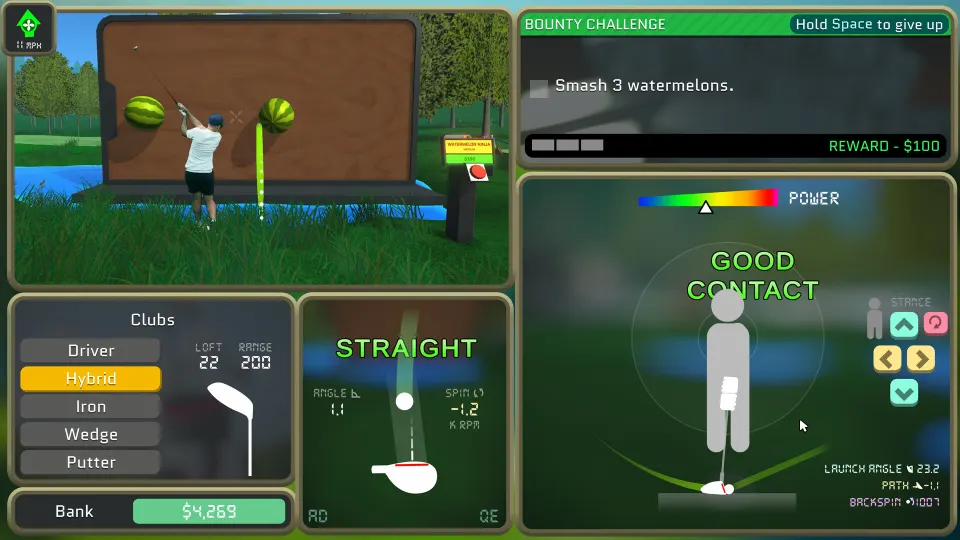
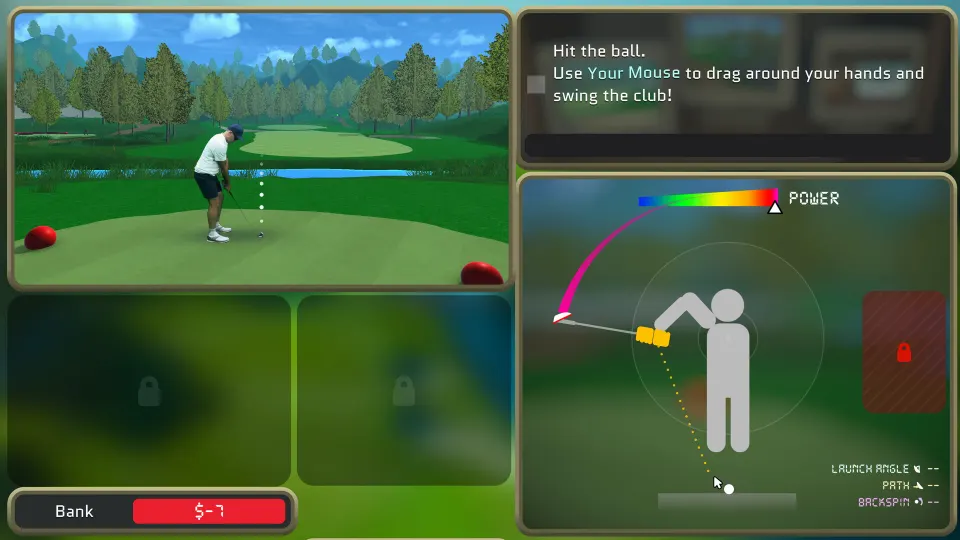
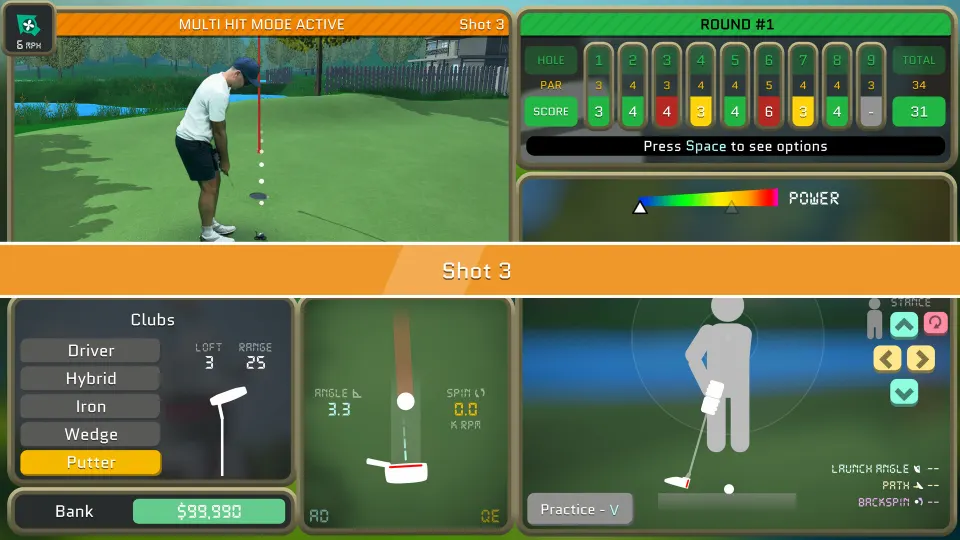
Normal Golf Game is built around physical mouse-controlled swings, stance placement, club-face rotation, and ball spin. The golf course is also a giant puzzle space filled with targets, routes, weather effects, and strange objectives. Treat Ending B as a completion project: learning the swing system is just as important as finding the next challenge.
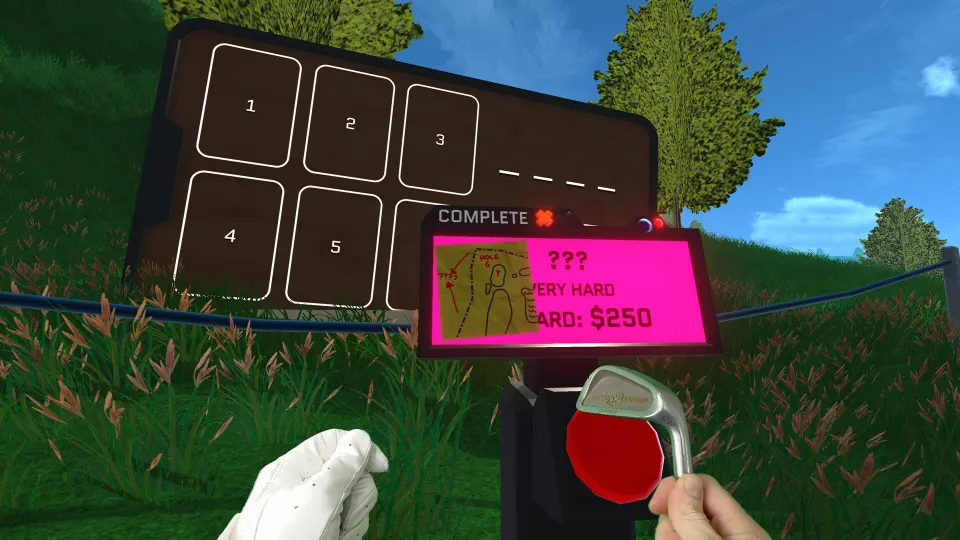
The most useful goal is to clear all 105 golf challenges while keeping an eye on missed objectives in earlier areas. The game’s narrative frames the course as an inescapable “ultimate golf challenge,” and Ending B is the route for players willing to see that challenge through.
| Ending route | Main focus | Typical commitment |
|---|---|---|
| Ending A | Finish the primary progression | Faster, story-focused run |
| Ending B | Complete the full challenge set | Long completion-focused run |
| Speedgolf | Finish golf efficiently | Score and pace optimization |
| Just Play Nine | Play a conventional nine-hole round | Bonus mode, separate from story progress |
Do not confuse Just Play Nine with the main completion route. It is a useful place to practice shots, but it does not substitute for clearing the challenges attached to the course’s story and exploration.
Build the Swing Skills First
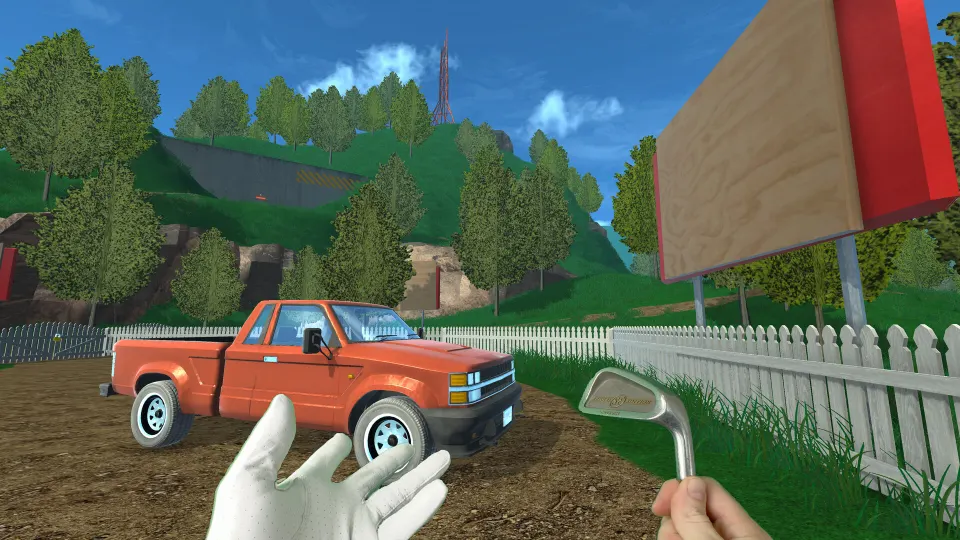
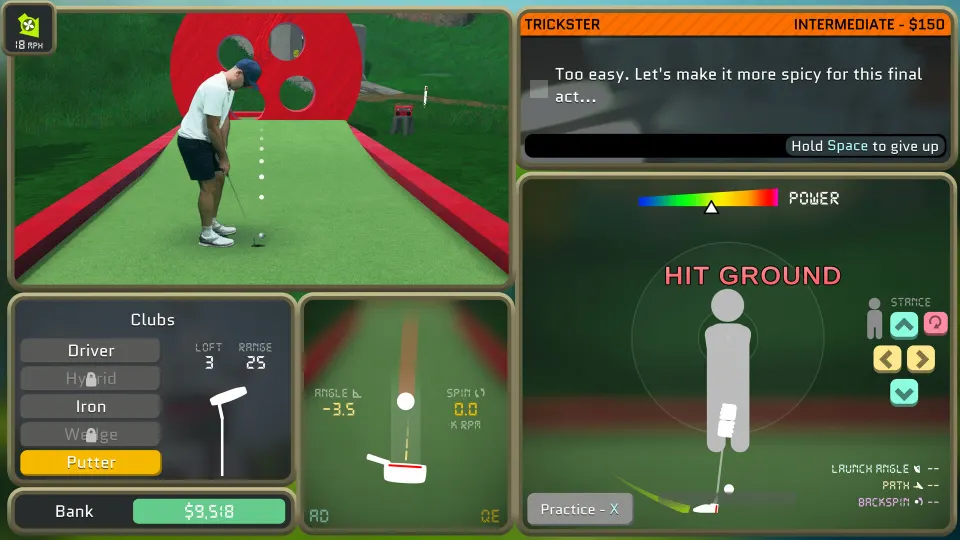
The Normal Golf Game Ending B route becomes dramatically easier once you stop treating every shot as a power test. The ball responds to where the club face meets it, how your character is positioned, the club’s angle, and the speed and direction of the swing.
Start by making repeatable contact. A centered hit produces the most reliable launch, while catching the ball high or low on the face can create thin shots, topped shots, or unpredictable trajectories. Resetting quickly after an attempt is useful, but do not reset before you learn why the previous shot failed.
| Shot control | What it changes | Practical use |
|---|---|---|
| Stance position | Launch height and contact point | Clear objects or keep shots low |
| Club-face rotation | Initial ball direction | Create slices or compensate for curves |
| Swing path and power | Distance and momentum | Reach distant targets without overshooting |
| Spin adjustment | Curve during flight | Hit targets hidden behind obstacles |
| Aim adjustment | Baseline target line | Fine-tune approaches and putts |
A reliable practice routine is:
- Hit several gentle, centered shots before attempting long-distance challenges.
- Practice a slice and a draw deliberately instead of only correcting them after mistakes.
- Change one input at a time when testing a difficult shot.
- Use low shots for targets protected by overhead obstacles.
- Use a reset after a miss, then reproduce the same setup with one measured adjustment.
Wind is another reason not to over-swing. A strong gust can turn an otherwise clean shot into a miss, especially when the ball stays in the air for a long time. Lower trajectories are often safer when you only need to reach a broad target area.
The game also rewards creative use of surfaces. Boards, signs, ramps, water skips, and large decorative objects can become part of the solution. If a direct line looks unreasonable, search for a bounce route or a different stance location before assuming the challenge requires perfect power.
A Practical Ending B Completion Route
For the normal golf game ending b, make steady progress across the course instead of repeatedly forcing one difficult objective. Challenges unlock and teach mechanics in layers, so early tasks are valuable preparation for the advanced ones.
Begin with the tutorial-style objectives around the opening area. They establish basic striking, fast resets, powerful swings, slices, straight shots, aiming, and exploration. Even apparently silly tasks—such as hitting a concealed object or destroying signs—teach useful control for later puzzle shots.
| Route stage | Priority | Why it helps |
|---|---|---|
| Opening lessons | Learn contact, aim, and basic curve | Establishes the core swing language |
| Nearby environmental tasks | Break targets and explore paths | Teaches that golf shots solve puzzles |
| Green and bunker tasks | Control distance and landing | Builds short-game consistency |
| Weather challenges | Adjust line and power | Prevents wind from ruining progression |
| Late bounties | Combine all mechanics | Moves you toward full completion |
Keep a simple checklist outside the game if necessary. Record the challenge name, its area, and the mechanic that seems to block you. This prevents wasted time revisiting completed objectives while helping you identify patterns, such as several missed targets that all require a high-launch stance.
When a bounty seems impossible, leave it temporarily. A later lesson, club option, route discovery, or improved understanding of spin may make the solution obvious. Ending B rewards persistence, but it does not reward turning one frustrating shot into an hour of random attempts.
Exploration is especially important after major milestones. Return to the central areas, inspect paths that looked decorative, and revisit targets seen earlier but not yet reachable. The course frequently presents objectives before you have the skill or positioning needed to solve them.
Challenge Strategies That Save Time
Most difficult challenges fall into a few categories. Identifying the category gives you a better starting point than blindly changing every control at once.
| Challenge type | Common problem | Better approach |
|---|---|---|
| Target destruction | Ball reaches the target without fully breaking it | Increase contact quality or strike from a better angle |
| Curved shots | Ball curves too early or too late | Set spin first, then compensate with face direction |
| Long-distance shots | Power creates wild misses | Build momentum smoothly and allow room for roll |
| Bunker or green landings | Ball skips past the zone | Reduce power and favor a higher, softer landing |
| Wind objectives | Ball drifts far off line | Aim into the wind and lower the flight path |
| Hidden-object tasks | No clear direct route | Look for geometry, elevated positions, or rebound angles |
For skipping challenges, start with a low line aimed at the surface rather than trying to blast the ball over it. A shallow strike with enough forward speed is more likely to create the desired bounce. Small changes to launch height matter more than adding maximum power.
For target practice, backspin and controlled landing distance are often more valuable than distance. If the target is narrow, first find a repeatable line that reaches it; only then adjust power. A near-perfect shot that lands short is easier to refine than a full-power swing that disappears across the course.
For math or puzzle-style levels, slow down and read the environment. These objectives may ask for something other than standard golf scoring. Check for visual clues, unusual objects, signs, or routes that make the intended interaction clearer.
Do not rely on one club for every situation. Choose equipment based on the task: a controlled option for precision, a stronger club for long carries, and whatever setup gives you a predictable launch on the current surface. Consistency beats theoretical maximum distance.
FAQ
What is the normal golf game ending b?
The normal golf game ending b is the game’s extended completion route. It is associated with finishing the full set of 105 challenges rather than only reaching the primary story ending.
Does Just Play Nine count toward Ending B?
No. Just Play Nine is a separate bonus-style mode for a more traditional nine-hole golf round. It is useful for practicing, but it does not replace main-course challenge completion.
How long does Ending B take?
Time varies greatly with swing consistency and puzzle-solving speed. Completion can take many hours because the route requires broad mastery of the course, not merely a fast story finish.
Should I use an easier difficulty?
An easier setting can be helpful for learning controls and exploring. However, some achievements may be unavailable under certain settings, so use the normal difficulty if you want the widest access to challenge-related goals.
What should I do when a challenge will not clear?
Leave it, complete other tasks, and return with a specific new idea. Review your stance, club-face angle, launch height, wind direction, and possible rebound routes before trying again.